Indoor rowing is a great aerobic exercise that can add variety to your training routine while engaging more than just the legs.
First learn to setup the equipment for proper use.
Good video instruction. I recommend you watch is a couple of times before jumping into a machine.
Now your ready to row, learn how to do it.
I started including the rowing machine while reading the first Tess Monaghan mystery, Baltimore Blues.
Phase 1–Drive (strong and quick)
Phase 2–Recovery (smooth and relaxed)
So after you've done a few minutes you will want to get some coaching about good form (what not to do). I found this video helpful and clear plus there are driller to help you improve.
For the experienced, none beginner, rower you'll want to do some sprints. This video from the same folks above lays it all out for you. I like to do a 10 pull sprint every 2 minutes but you should research this because I don't know what I'm done :)
Showing posts with label books. Show all posts
Showing posts with label books. Show all posts
Saturday, June 29, 2013


Sunday, May 20, 2012
Starlings of Otmoor
Otmoor RSPB reserve in Otmoor England.
Local rules seen in mass.
I was turned on to this place by Richard Dawlins' book The Greatest Show on Earth: The Evidence for Evolution. I hated the introduction because it was preachy and a personal attack on the people who choose to pretend science doesn't exist, history-deniers, while they assert (without evidence) that God does; I suggest you skip to the actual presentation of the science.
The audio book is read by the author and Lalla Ward (four minutes in the above clip); trading off for asides and sections keeps it fresh, coherent and non-drowsy.
Monday, March 26, 2012
Plagiarism, a much larger problem then you though
 I bookmarked this email a while ago and just got around to watching it today (1 hour duration).
"I gave a lecture on plagiarism in professional writing and research that some of you might find interesting. The lecture was taped and is available at http://media.fit.edu/load.php?clipid=3102"
The lecture is titled Plagiarism Detection Software by Professor Cem Kaner, 2008. I don't have access to the citations he handed out before the lecture. (Please add a comment to this post if you have a link.)
The following is what I took away and want to be able to refer back to (so I am blogging it).
- Plagiarism = using someone else's words or ideas.
- Copyright = using someone else's words.
- Citation = acknowledgment of someone else's ideas.
- Citation is done to provide the reader with a way to follow up on an idea, dive deeper.
- I find it unbelievable how much plagiarism there it, especially in "professional" venues.
- Plagiarism detection software marketing claims didn't stand up (in 2008), profession/private publications not included.
- Deans tend to think that if the software didn't flag a paper then plagiarism didn't occur.
Plagiarism detection software are tools used by self respecting plagiarist to double check that their cheating will not be routinely caught. The same tool will be used by a university or publisher to check for plagiarism. Sounds like a university tells you which software will be used to do the plagiarism checking so you can fix the paper before submitting. [This was my idea but I give credit to Cem has I think his lecture was designed to lead us to this conclusion.]
I will use citations to show that I know what I am talking about, that I am familiar with current technology/thinking and that I didn't pull these ideas out of my *.
Monday, July 11, 2011
Origins of PowerShell; interview with Bruce Payette
Bruce Payette, one of the original PowerShell team members and author of the Windows PowerShell scripting language here discusses the design goals and origins of the PowerShell language.
His tech history is interesting. Sounds like the kind of guy I use to work with back in the day (before .com world).
Talks about how PowerShell came into existance. Why > wasn't used for greater then, how the language was designed and developed, et cetera.
Bruce's book is perhaps the most respected book on PowerShell for developers, Windows Powershell in Action, Second Edition.
Thursday, June 2, 2011
The Presidential Agent books
The W.E.B. Griffin series The Presidential Agent is one of my favorite reads. Set in present day they are about honorable military men working for our counter in the fight against terrorism.
The are all long books, around 15 hours, with complex plots and none trivial characters. I have rated all six of these books 5 stars, my highest rating, because I often forget where I am driving to and don't want to turn the book off when I do get there.
As I recall the first book (By Order of the President) stands alone while the second and third continue the story. The Outlaws is book VI in the Presidential Agent series; it pretty much recapitulates the earlier books because the detailed history is required to follow the current action. Ofter the review of previous story point is tedious but I really enjoyed the way it was integrated into the story (because it was like going back to old friend and reminiscing.)
Book I, By Order of the President (2005) Book II, The Hostage (2006) Book III, The Hunters (2007) Book IV, The Shooters (2008) Book V, Black Ops (2009) Book VI, The Outlaws (2010)
Friday, April 22, 2011
The Rules of Improvisation
- Always agree and say "YES!"
- And not only say "YES!" but say "YES, and ..."
The first rule, always agree. Say yes. Say, “yes, and” to things. For example, if I enter a scene and say, “I have a gun.’ And you say, “No, you don’t. That’s your finger.’ That’s terrible. Now we’re done. Saying “yes” means you’re basically agreeing to honor what the other person is creating. The next part is “yes, AND …” which means to contribute something on your own, like, ‘I have a gun’ and you say, ‘but you’ll never get the gold because I put it in my butt.’ I wouldn’t recommend THAT … but that’s the end, you’re contributing. It’s an exercise in being in the present. To follow your partner, to ask questions.It means don’t be afraid to contribute. It’s your responsibility to contribute. Always make sure you’re adding something to the discussion. Whatever is thrown at you, make an effort to agree and add something. In other words, whatever the problem, be part of the solution. Don’t just sit around raising questions and pointing out obstacles.
Learned from the section The Rules of Improvisation That Will Change Your Life and Reduce Belly Fat in Tina Fey's new book Bossypants (2011).
See also Tina Fey's "Bossypants" Lessons for the Workplace, Nell Minow's blog.
Thursday, January 13, 2011
Extreme Characters and Soap Opera Testing
I'm reading Mike Cohn's book User Stories Applied: For Agile Software Development in order to switch my mind set into the Agile Development mode for the coming year(s). I recommend this book for people doing agile development.
Extreme Characters is a concept the book introduces. Mike correctly states that it will not be useful for most project but it is worth knowing about. I agree. But it got me thinking. Wouldn't Extreme Characters fit into Soap Opera Testing perfectly.
Cohn sites Djajdiningrat, J.P., W.W. Gaver and J.W. Fres, "Interaction relabelling and Extreme Characters: Methods for exploring aesthetic interactions." Symposium on Designing Interactive Systems 2000, 2000:66-71. See poster for the article.
A 5 minute google didn't turn up much of anything detailed on Extreme Characters other than what Mr. Cohn wrote/teaches. Food for thought and grounds for further research.
(Cool. I bought the Kindle ebook and read in on my laptop at work or on the Kindle at home. It is also sitting on my iPhone should I want to make a quick reference during a stand up.)
Friday, December 10, 2010
Mindless Eating, Not
The Scientific American podcasts feature the research of Dr. Brian Wansink on eating (see my Thanksgiving blog post). I've borrowed a copy of his book Mindless Eating and obtained the audio book as well. After reading the book for general knowledge I wanted to capture the tips Dr. Wansink suggests that I think I will find useful at some point. What follows is my interpretation of the ideas included in the book.
- Don't be the first person who starts eating.
- Wait until everyone is at the table before picking up you silverware.
- Slow down, pace yourself with the slowest eater at the table.
- Avoid large plates, use smaller plates.
- Serve yourself in the kitchen and eat in another room.
- Holiday meals require multiple serving. Take very small portions and go back (so host knows you really like the food.)
- Don't eat out of the container the food came in. Serve what you want and put the rest away.
- Stop eating before everyone else has stopped. I.e., don't be the last one stuffing their face.
- Two or three types of food at a time when grazing at a party. The more variety you preceive the more you will eat.
- Fancy names make food taste better.
- Higher prices make food taste better.
- Artful presentation make food seem more expensive and fancy thus it tastes better.
- Loud noise/music dulls the taste.
- "The best diet is the one you don't know you're on."
- Don't eat while working. Stop to eat mindfully.
- Play video games that occupy your hands (so you can't eat and play).
- Get you snack before sitting down to watch TV. Avoid eating out of can in front of TV.
- The more deprived you feel the bigger the reactive whiplash.
- Don't eat if you don't feel hungry.
- Stop eating when you don't feel hungry any more.
- It is likely that you should stop eating before you actually don't feel hungry any more.
- Decide what and how much you are going to eat before serving yourself (not during meal).
- Serve yourself. Don't measure love by amount people serve you.
- Serve yourself smaller amount and go back for seconds and thirds.
- Keep the bones and empty bottles on the table so you can see how much you consumed.
- Use clean wine glasses for the next round, see how many glasses you have had.
- Serve 20% less food. It is OK to get up to get the remaining 10% is you like later.
- Increase your fruit and vegetable servings to compensate for 20% reduction is meat/carbs.
- Candy/nut bowls out of reach, must get up to grab some.
- Serve a portion of nuts and put the can away. Then go eat the serving consciously.
- Throw away the junk you don't want to eat. No law says you have to digest it.
- Chopsticks may slow you down compared to the ease of shovelling with a fork.
- If buy large/bulk goods repackage into reasonable containers.
- Seal potato chip bags with tape to discourage mindlessly eating just one more.
- Snack from a clean plate (not package, or standing up).
- Junk food must be on the grocery list specifically, not a spontaneous selection.
- Tempting foods stored outside your daily traffic pattern.
- Ask waiter to remove beard basket after you get what you want.
- Ask waiter not to refill drink.
- Pile the used plates at the all-you-can-eat buffet in front of you, ask busboy to leave them on the table.
- Large portions at restaurant, ask for take home container and fill it with the leftovers before eating.
- Want dessert, share it with someone. The first three bites are the best.
- Restaurant; appetizer, alcohol, drink, desert: select two and skip the others.
- Restaurant; order two appetizers instead of a meal. Emmh, hot wings.
- Tell guests how hard you worked preparing this special dish.
- 15 minutes on atmosphere will significantly improve the dinner party.
- Print menus for your dinner party. Use the fancy names with colorful adjective.
- Program yourself for healthy(er) comfort food. E.g., pizza and ice cream instead of champagne, caviar and chocolates.
- Refuse to deprive yourself. If you really want it, have it.
- Snack by serving size. Serve a serving only, don't leave extra around for snacking.
- Half-plate Rule: 1/2 plate vegetables and fruit, other 1/2 is carbs and protein.
- You can still find junk food in a "health" restaurant. (Goodness by association.)
- Super size for super thighs. Order the small size fries and be wise.
- Order the small size. Ask for a refill or order another french fry is you still need it after eating the original order.
- The more effort it takes to get food the less likely we will make the effort. (Get out of the car and walk in to order fast food from a person.)
- Negative Mindlessness = Overeating
- Mindfulness = Reengineering
- Positive Mindlessness = Better Eating
- Use 'food trade-offs' to include indulgent foods. E. g.,"I can have ice cream if I get my cardio up to 185 for five minutes.' or "I can have chips and salsa because I eat my apple today."
- Don't commit to big changes/sacrifices, just do the new/health habits that you can easily/mindlessly do.
- Create a 'Mindless Margin Checklist'.
- Review your Mindless Margin Checklist daily.
- The Power of Three. Design 3 easy/doable changes you can do mindlessly. Nike.
Thursday, November 25, 2010
Mindful mindless eating
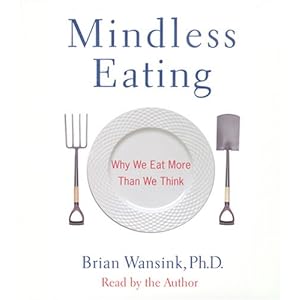 Thanksgiving 2010 and all the podcast are talking about food, over eating and turkeys. We cooked our turkey last weekend and finished it off last night, gooood.
The SciAm podcast turned me on to Dr. Brian Wansink's work, research into why and how we eat (watch the videos.)
His research shows that serving food at the table, family style, boosts overeating, while folks who fill their plates at the stove eat less.He has developed a bunch of products to aid in mindful mindless eating, www.mindlessproducts.com. Smaller sizes and nicer presentation.
I've reserved a copy of his book Mindless Eating: Why We Eat More Than We Think from the library and will be listening to the abridge audio version as well.
Wednesday, November 24, 2010
Title Fight
 Title Fight by Matt "Mad Dog" Wallace and Scott "The FDO" Sigler is one exciting ride. Mixed martial arts / gladiator / boxing / honorable warrior / Samaria audio novella.
 I strongly recommend this book to anyone who enjoys "guy's night out", grip you crouch in sympathy, want to look away pussy-boy fiction.
 [Click to view poster.]
The book is much better than this video promo. Set in the Sigler universe timeline between the "The Rookie" and "The Starter" one does not need to have ready any other Sigler story to understand this fight genre tough guy story.
Download it from PodioBooks.com today.Saturday, November 13, 2010
Changing Education Paradigms
You will want to watch this lecture/animation in HD in full screen mode.
Many people see this and say "When is someone going fix this?" I say do it yourself, change yourself, be the change you wish the see in the world.
How? If you need to ask or want some help my friend James Bach has a great book that you can use as a catalyst. I blogged about this subject after James published The Secrets of a Buccaneer-Scholar (website/videos). Read excerpts on Google Books. Here's a quote from Chapter 2.
A buccaneer-scholar is anyone whose love of learning is not muzzled, yoked, or shackled by any institution or authority; whose mind is driven to wander and find its own voice and place in the world.
Saturday, August 28, 2010
Learning PowerShell
My professional goal for 2010 is to start using PowerShell. The developers back in Chicago use it for everything and it seems to be the new scripting language of choice for the Window world. (Pash is a cross platform open source version was started but no news for a couple of years.)
Lots of resources on the net; blogs, script repositories, books, podcasts and such.
 I have been reading a tutorial designed for people who don't know object oriented programming. As my scripting skills were developed a century ago. There hasn't been an opportunity to think OOP since the LISP days at IntelliGenetics. This introduction with explanation of OOP terminology/thought is very helpful. I imagine it would be a bit slow for someone versed in .NET or C++. Check it out on the Microsoft site, Sesame Script.
I am using the book Microsoft Windows PowerShell 2.0 Programming for the Absolute Beginner by Jerry Lee Ford to great effect. Reading it cover to cover and doing the example assignments. After completing chapter 3 I felt that I could re-write any script I've created in csh|sh|ksh into PowerShell. So no problem going forward building scripts at work (check off one 2010 job goal;).
Saturday, March 27, 2010
Books that stop bullets
Can a W. E. B. Griffin novel stop a bullet? Is it thick enough?
Dense Book And Hollow Bullets attempts to answer this and other literary questions (see video below).
Tuesday, March 2, 2010
Vim on Mac
 Just installed Vim on my Mac. I did it so that I can learn all the stuff that it does beyond vi. Vim should be useful as I extend my CSS and XHTML skills.
 I've been studying The Art of Code podcast by Ted Forbes and really like the tool he uses for editing because it uses color to denote XHTML syntax. He also introduced me to TextExpander and TypeTester.
A Byte of Vim is a book recommended for MacVim users by Swaroop C H. First thing I want to investigate is Vim scripting.
 GFR-vim As A Personal Wiki article.
GFR-How to Get Started with Getting Things Done, about David Allen's work.
GFR(optional)-Why, oh WHY, do those #?@! nutheads use vi?
GFR-Vim Recipes
Saturday, February 20, 2010
New iPhone; Books and Podcasts, give a listen
So you have a new iPhone and have downloaded a bunch of free apps, now it is time to start some serious work with your phone. (See also my other iPhone blog entries.)
You need to subscribe to some podcasts to expand your working knowledge of stuff. I recommend starting with any/all of the podcasts from Grammar Girl's site, QD Now, www.quickanddirtytips.com. Subscribe from this site or search for the podcasts in iTunes.
The UC Berkeley course Physics for Future Presidents is outstanding. Every semester the course is made available via iTunes. Finding this and figuring out how to put it on your iPhone will be a learning experience well worth the effort.
Books on Tape/CD/MP3 are a natural for the iPhone. Here are a couple of sources to get you started.
- CrimeWAV–short stories read by the authors; detective and crime fiction (adult content).
- Jack Wakes Up–contemporary hard-boiled fiction set in San Francisco by Seth Harwood.
- Scott Sigler–several books all read by Scott. Start with Ancestor for SciFi Horror or The Rookie for sports/action/SciFi.
- PodioBooks–this is where I discovered Seth Harwood and Scott Sigler. Download and listen to the book then donate because you like the book and want to support the author.
- Decoder Ring Theater–radio-style half hour shows. I love the Black Jack Justice series.
- Audible.com–buy normal books for download listening. The first book is free, promotional code GRAMMAR.
- Your Local Library–physically check out the books on CD and use iTunes to add them to your library. Make a "music" playlist of the imported tracks and sync the playlist to your iPhone.
Friday, February 12, 2010
Around the World in 80 Days
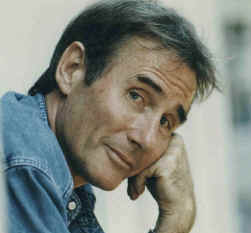 Just finished listening to Jim Dale's reading of "Around the World in Eighty Days" by Jules Verne.
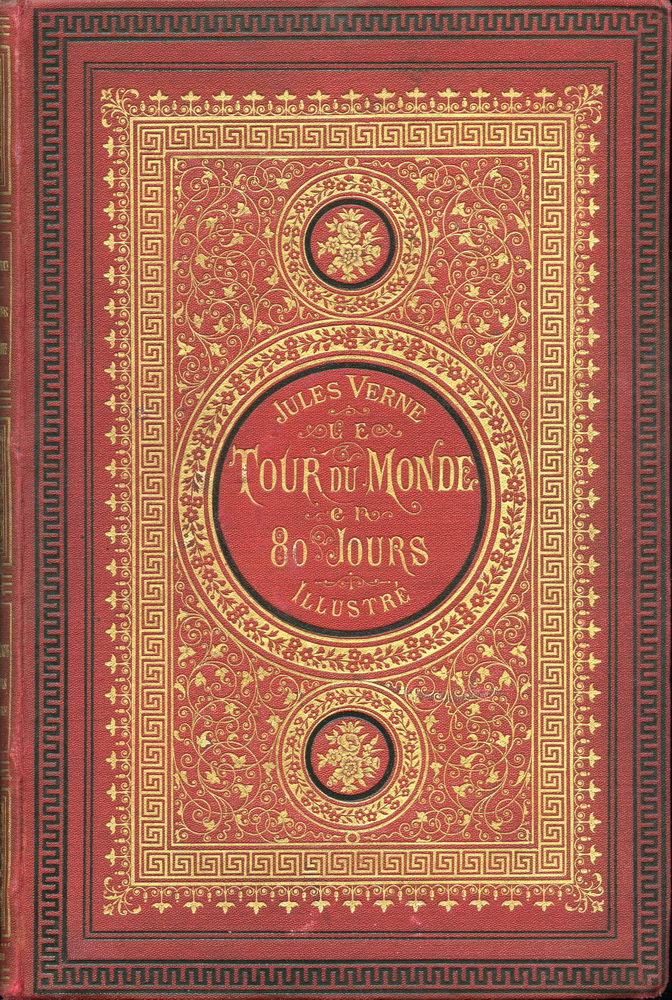 Originally written and published in 1873 as a French magazine serial (French: Le tour du monde en quatre-vingts jours). In the story, Phileas Fogg of London and his newly employed French valet Passepartout attempt to circumnavigate the world in 80 days on a £20,000 wager set by his friends at the Reform Club.
The image of a hot air balloon is from the 1956 film adaptation of Verne's book. The only time a lighter than air balloons is mentioned in the book is to state that it would be impractical as a means to cross the Atlantic ocean from NYC to London.
The reason I read this classic is that I somewhat enjoyed the book written my Michael Palin about his attempt to reenact Phileas Fogg's journey. Derived from the BBC 1989 series of the same name. Throughout Palin's book he referenced the Verne classic so I thought it would be informative to read the original. I must say that I enjoyed the story and reading by Jim Dale, the CD has background music and high production values which make it quite entertaining.
This would be a great CD to reserve at your local library to play in the car when you are hauling the kids around.
Wednesday, December 23, 2009
Evolution in Nocturnal
 Episode #25 of Scott Sigler's book Nocturnal has a nice dialog on evolution and behavior. I'm not sure what I think about it, only that I need to study more and think about it. It folds into a discussion in On The Origin of Species, another book I am reading his month.
The Buccaneer scholar sails on.
Tuesday, December 22, 2009
The Buccaneer-Scholar

 I recommend this new book, Secrets Of A buccaneer-Scholar by James Bach, to all my students and friends.
Wednesday, December 2, 2009
You Only Live Twice
I am reading You Only Live Twice by Ian Fleming this week. Good fun.


The password is: Freddy Uncle Charlie Katie
Every dog needs a few fleas otherwise it will forget it is a dog.
You only live twice, once when you are born and once when you look death in the face.—James Bond (a.k.a. Bondo-San and Agent 777 in the book)
Really enjoying the book. A lot about Japan and Japanese culture. It worries me that Ian Fleming did a good job of describing it because if he understood it as well as I think I do then I must not get it at all. Shimata(sp), I make a mistake.
Everything is new tomorrow.
The story deals with Bond's depression/mid-life_crises following the death of his wife and a couple of failed missions. With James ready to resign and run a chicken farm M sends him on a mission in the hope that Bond will discover his second chance at life.
Sunday, November 29, 2009
Pinwheel Star, getting started
As I plan for my hip replacement surgery I am once again thinking of quilting. It must be because I will have time available that is currently scheduled for work, commuting and karate.
I want to do some complex creative project that require additional quilting skills. To the end of having a full set of tools I will be doing small project each focusing on developing my skills.
Started by checking out a bunch of books from the library and looking through them. I've already blogged about Michael James, that is the kind of stuff I want to do artistically. The book that grabbed me for learning technique is Teach Yourself Visually Quilting (2008) by Sonja Hakala. I have learn stuff and remembered other things, nice to see that my quilt teachers passed along a lot of solid tips (include in this book).
In order to learn to sew triangles with sharp points I will be doing the Pinwheel Star Quilt Project on page 128. This finished quilt picture is from the book. Below are the fabrics that I picked for my project.
 Picked out the fabric today. This quilt will be machine quilted and bound.

Subscribe to:
Comments (Atom)
